Lake Mungo - LM3 and Port Phillip non-Bay
Original Published Date : 2004
From the archives1 . Written back in 2004. For the Aspect Computing staff newsletter, I think. Was originally 'LM3 and Port Phillip non-Bay'. Science moves on and in the 20+ years since, some findings have changed. I have updated the body and included changed footnotes.
He was buried on his right-hand side. Hand clasping hand and not that far from Mildura. It was probably just how he wanted it too. An emotional ceremony within sight of his beloved warm, shallow lake. Home.
Well, it was close to Mildura in distance. Probably 100 kilometres as the crow flies. A bit further away in a temporal sense. They buried him around 40,0002 years ago with equal parts dignity and red ochre.
His name is LM3. Sounds more like a robotic companion from a b-grade science fiction movie. Actually, it stands for “Lake Mungo 3”.
The “lake” vanished thousands of years ago. It’s now a huge bowl in the desert off to the northeast of Mildura. A few other important skeletons had been found there in the 1970s, but the rains of ’73 exposed something quite interesting. The gender of earlier finds could be determined and they were given names like Mungo Man. This third major discovery – in 1974 – proved more difficult to classify and was given the name generic tag of LM3. In the years since, things have become a bit clearer.
Evidence suggests that Lake Mungo back 40,000 years ago would have been a very nice place indeed. The lake would have been quite shallow and probably teeming with wildlife. A permanent larder of fish and fowl for LM3 and his friends and family.
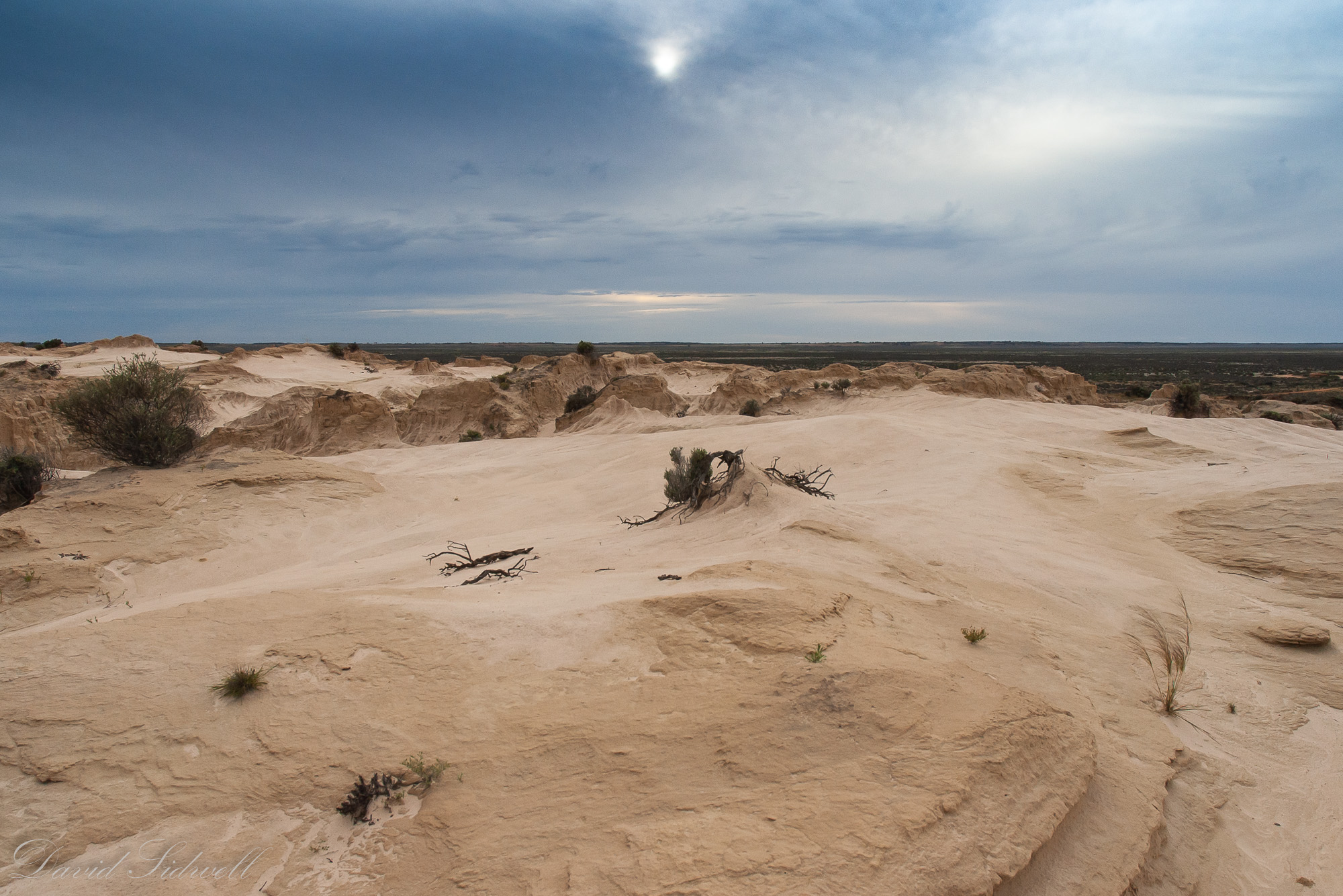
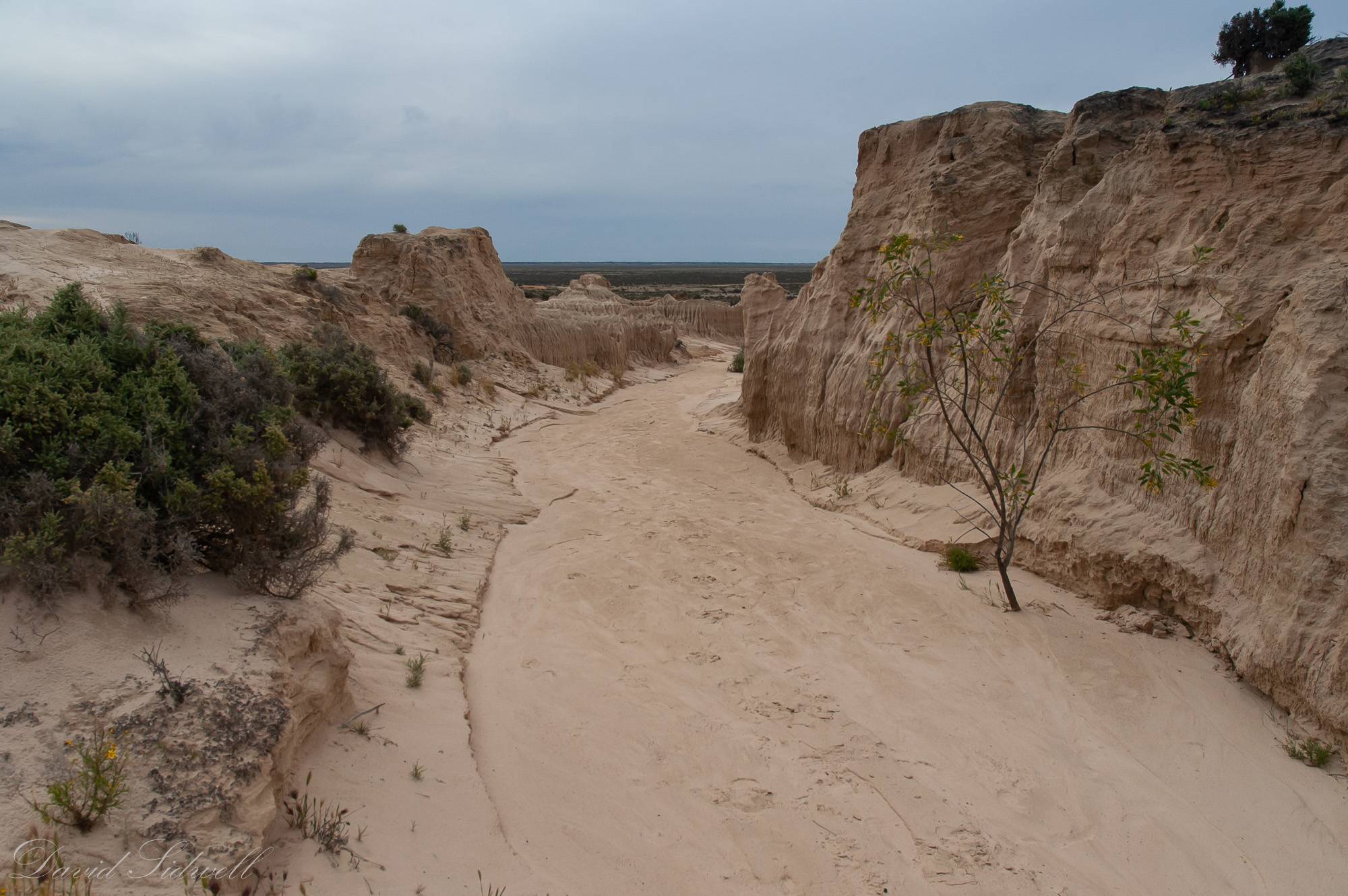
It is a quietly moving experience to travel to Mungo today and watch the sunset. Your car drops down into the lake bed. It seems to be only a few metres below the surrounds. Kangaroos and emus go hurtling past you, reflecting a drier version of LM3’s larder. You finally reach the eastern edge. Even now fragments of bone are visible on the ‘shore’. Look but don’t touch.
As the sun sets over the dry bowl it puts things in context. Captain Cook did his 1770's stuff about 250 years ago. Some 8 generations have passed since then. LM3 was standing here over 2000 generations ago. Who knows how long before that his distant relatives arrived up North.
In a converse way, Lake Mungo 2001 - when I visited there - has its parallels with Melbourne of 18,000 years ago. Back then the seas around Australia were some 150 metres lower than today. Doesn’t seem much, does it? But more than enough for Port Phillip Bay to be dry. Oh and Bass Strait too3.
The Bay of 16,000 BC would have been a shallow depression, probably not even noticeable as the trees within it would have been taller than the dip. A mega-river flowed along the east side of this bowl, out through the two hills and off over the "Bass Plains" to “Tasmania”. The remnant it left behind is what we call the Yarra.4
Think about that 40,000 years number. Ancient Egypt was still about 35,000 years away from starting up.
-
It took a while to find this; it was inside an archive (.tar), which was inside another archive (.zip). All being part of the large back up of an old website of mine. Glad I kept it all! ↩
-
The original 2004 article had 62,000 years ago. Subsequent dating work (Bowler et al. 2003) places the burial closer to 40,000 years, with human presence at Lake Mungo dating back 46,000–50,000 years. The debate continues. LM3 was also tagged as 'she' with a disclaimer saying "she may not be a she at all." Current evidence leans male. ↩
-
Aboriginal Melbourne - Gary Presland 1994 ↩
-
ibid ↩